

Lean Six Sigma Certification a top-rated and India’s most recommended Lean Six Sigma Course. The course is aligned and accredited by global accreditation boards and integrates Six Sigma, Lean, Artificial Intelligence and DMAIC methodologies using case studies and real-life examples.
Participants will learn how to embed AI across the DMAIC lifecycle to enhance process discovery, identify hidden patterns in data, perform AI-assisted root cause analysis, generate predictive insights, automate reporting, and drive high-impact continuous improvement initiatives with greater speed, accuracy, and business value.
The course features world-class content with live projects, AI Tools and MINITAB PRO-driven data analysis training with end-to-end support in project implementation by Master Black Belt Experts and Trainers.


Global Recognition of Your Lean Six Sigma Certification
- Lean Six Sigma Curriculum and Certification Accredited by The Council of Six Sigma Certification, USA
- Certification Accredited by International Quality Federation, USA
- Training aligned and Acknowledging The American Society for Quality, USA
- Course Approved by Ministry of Skill Development & Entrepreneurship, Govt. of India
- Certification accredited by UKAC, United Kingdom
- Certiifcation accredited by American Board
The unique methodology for training and project support is something that differentiates ISEL GLOBAL from other training institutes. We train you on the basis of the experience which we have gained from the Six Sigma Consulting we do for our clients. We help you understand the actual challenges faced and how to overcome them while running a Six Sigma Lean project.
| Participants INTRODUCTION & ROTI ( Return on Training Investment) setup | A brief intro of participants & Learning objective | ||||||
| Expectation setup from the workshop | |||||||
| An overview to lean six sigma benefits, application, and relevance in participants profile | |||||||
| Guide to download MINITAB | |||||||
| Live project selection | |||||||
| Guide to using and download Templates and Toolkits application for Project work | |||||||
| Overview to QUALITY and LEAN SIX SIGM | History of Quality (Deming, Juran, Ishikawa, Taguchi, etc.) | ||||||
| Evolution of Six Sigma | |||||||
| Evolution of LEAN manufacturing | |||||||
| Six Sigma – philosophy and objectives | |||||||
| Deliverables of a Lean Six Sigma Project | |||||||
| Project Management Fundamentals | |||||||
| Six Sigma Roles & Responsibilities | |||||||
| LEAN SIX SIGM framework and how dose it work | Meanings of Six Sigma | ||||||
| Data driven decision making | |||||||
| The Problem Solving Strategy Y = f(x) | |||||||
| Understanding How DMAIC and DMADV frame work | |||||||
| Documenting STAKEHOLDER REQUIREMENTS | SIPOC - Identifying stakeholders and customers | ||||||
| Determining critical requirements | |||||||
| Identifying performance metrics | |||||||
| QFD - Quality Function Deployment | |||||||
| Voice of the Customer, Business and Employee | |||||||
| DEFINE PHASE tools | Project selection , Project prioritization, KANO Model, Juran's customer needs | ||||||
| Preparing project charter | |||||||
| Initiating teams, Stages of team evolution | |||||||
| Mapping As - is process flow | |||||||
| Understanding Critical to Quality (CTQ) and VOC to CTQ drill down | |||||||
| Cost of Poor Quality (COPQ) and its types | |||||||
| MEASURE PHASE tools | Understanding of Data , Types of Data , Dimensions of Data | ||||||
| Population Data (VS) Sample data , Sampling Techniques | |||||||
| Sample Size calculation, Confidence level and confidence interval | |||||||
| Data collection template and techniques | |||||||
| Measurement system analysis - Calibration, Gauge R&R, KAPPA analysis | |||||||
| Central Limit Theorem | |||||||
| Stability and Distribution types | |||||||
| Descriptive statistics (Measure of central tendency & Measure of variation) | |||||||
| Base Line sigma calculation (DPU, DPMO, Cp,Cpk) | |||||||
| ANALYZE PHASE tools | 7 QC Tools (Histogram, Cause-and-Effect Diagrams / Fishbone Diagram, Pareto charts, Control Charts, Scatter diagrams, Process Mapping, Check Sheet) | ||||||
| 5 Why Analysis , Control impact matrix, Tree Diagram, Affinity clustering | |||||||
| Data visualization - Box Plot, Multi Vari charts Trends and comparison charts | |||||||
| Hypothesis testing - Parametric test (Continuous Data , Discrete Data) Alpha & Beta errors | |||||||
| LEAN METHODOLOGY | Fundamentals of lean , 5 principles of lean | ||||||
| Value add (VS) non value add and 8 Types of deadly waste | |||||||
| Value stream mapping - Lead Time, Processing Time, Cycle Time, Turnaround Time, First Pass yield, Rolled Throughput Yield, Process Cycle Efficiency | |||||||
| Heijunka - Leveling, Sequencing, Stability, TAKT time | |||||||
| Jidoka, Poke Yoke, Autonomation, Built-in Quality, Stopping at Abnormalities | |||||||
| Visual Management, 5 S implementation | |||||||
| JIT (Just in time), Critical level of replenishment , Supermarket or consumption based replenishment, Kanban | |||||||
| Kaizen, LEAN action work out (AWO) | |||||||
| IMPROVE PHASE tools | Solution design matrix, Brain storming | ||||||
| Failure Mode effect analysis | |||||||
| Regression techniques - Simple linear regression , Multiple regression | |||||||
| Design of experiments (DOE), Taguchi robustness concepts | |||||||
| Basics of solution generation through "Design Thinking Concepts" | |||||||
| "Six Thinking Hats" - Dr. Edward de Bono | |||||||
| CONTROL PHASE tools | Statistical process control | ||||||
| Control plan for sustaining benefits | |||||||
| Introduction to Control Charts and Types of Control Charts | |||||||
| PROJECT DOCUMENTATION and Sustenance | CBA - Cost benefit analysis | ||||||
| Project documentation as per DMAIC frame work | |||||||
| Horizontal deployment of lessons learned | |||||||
| Inculcating LEAN SIX SIGMA DNA in all layers of organization | |||||||
From the course:
- Learn the principles and philosophy behind the Lean Six Sigma technique
- Learn about Six Sigma Lean Tools and Lean Six Sigma Certification Cost
- Learn to apply statistical methods to improve business processes
- Design and implement Six Sigma projects in a practical scenario
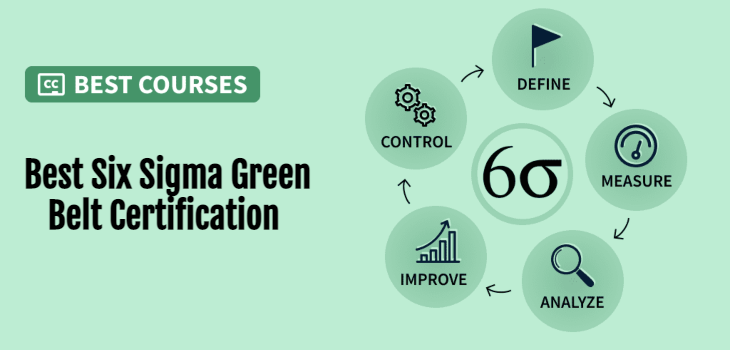
- Learn the DMAIC process and various tools used in six sigma methodology
- Knowledge of Six Sigma Green Belt Professional enables you to understand real-world business problems, increase an organization’s revenue by streamlining the process, and become an asset to an organization
- According to Villanova University, employers such as United Health Group, Honeywell, GE and Volkswagen have been actively seeking professionals with Six Sigma to fill a variety of positions.
According to Indeed, the national average salary for a Green Belt Professional is $72,000 per year in the United States.
According to recent surveys, the median salary for certified professionals in this field is approximately $83,107 per year.
From the workshop:
- Instructor-led training by Six Sigma Black Belt and Master Belt experts to make candidate learn the real scenario of six sigma tools and methodology
- Learn the principles and philosophy of the Six Sigma method
- Dummy project by instructors to make candidate get a hands-on six sigma projects
- Downloadable e-book and Lean Six Sigma PDF
- Industry-based case studies
- High-quality training from an experienced trainer
- The Program extensively uses Minitab, specialized statistical software. It provides you with a thorough knowledge of Six Sigma philosophies and principles (including supporting systems and tools).
A Lean Six Sigma Green Belt certification is ideal for professionals who are actively involved in process improvement work and want to drive measurable results within their teams or organizations. Specifically, it’s suited for:
Who Should Do a Green Belt Course?
- Managers, team leads, supervisors, and project owners are responsible for improving processes, quality, and performance.
- Individuals in operations, manufacturing, quality, supply chain, logistics, service delivery, and customer support who need structured methods to reduce defects and waste.
- Those who participate in Lean Six Sigma projects and support data-driven problem solving.
- Professionals aiming to build a career in Lean, Six Sigma, operational excellence, or business transformation.
- Analysts who need tools to measure performance, interpret data, and implement sustainable solutions.
Key Benefits for the Right Candidate
- Learn structured problem-solving using DMAIC
- Gain skills in data analysis and process optimization
- Lead Green Belt level improvement projects
- Improve decision-making with metrics and root cause analysis
- Strengthen leadership and change management capabilities
On successful completion of the course and course requisites, the candidate will receive an Internationally Accredited, Globally Recognised and a Lifetime Valid, Certified Lean Six Sigma Green Belt Certification.
CLSSGB Certification Accredited by the Global Accreditation Certification Board, American Board, CSSC, IQF USA & UKAC United Kingdom.
This course offers Lean Six Sigma Certification Validation Tool for Employers
Your Lean Six Sigma Certification Validation Tool can be used by employers, clients, and other stakeholders to validate the authenticity of your Lean Six Sigma Certifications you have received. Using the programming code located on your certified LSS certification, one can see all your training and certification details online.









.jpg)

.webp)